
01932 544 095
CleverWorks Logo
Rated 5.0 on Google & Trustpilot

Expert CCTV Drainage Survey & Repairs

Stop guessing with plungers and chemicals. Our comprehensive drainage services—from high-definition CCTV surveys to emergency unblocking and repairs—solve your drain problems instantly across London, London.

WRC & LWA Approved Reporting
Fixed Pricing
Reports returned in 3 days
Loading map...

Trusted by homeowners and businesses across the UK

Trustpilot
JIB-PMES
SafeContractor
WRC Approved

Contact Us Today

No call-out charges. No hidden fees. Just honest, expert advice and transparent pricing.

  • Quotes returned in 2h on average
  • Fully insured & certified

Prefer to talk?

01932 544 095

Your information is secure and never shared.

10+
Years Experience
450+
Happy Customers
550+
Drainage Surveys Completed
25+
km of Drains Surveyed

What Our Local Customers Say

Real reviews from homeowners and businesses across London.

"Really useful report received for my flat purchase, my solicitor has informed me ‘it is worth its weight in gold’. I was lucky to come across this company they have saved me a lot of potential major issues with the purchase. The report was very thorough so worth having a phone call also to get the big picture."

— Rachel Abbey

"Top rate service provided by Clever Works. They were professional, thorough, and immaculate when it came to regard for the property They managed to remove tiles without damage, complete surveys and assist with potential future activity and needs. Can’t recommend the company more highly. Outstanding level of service, detail and care."

— Samuel Nash

"Used this company for my extension build over agreement with Thames Water and I was extremely impressed with their knowledge, service and effort. Looking forward to using them again!"

— Thomas Duffy

Drainage problems don't fix themselves. They just get more expensive.

Whether you're dealing with a stubborn blockage that keeps returning, foul smells you can't locate, or you're buying a new home and want peace of mind—guessing isn't a strategy. Our professional CCTV drainage surveys provide the clarity you need.

Recurring Blockages

If you're plunging the same drain every month, there's a deeper issue. Tree roots, collapsed pipes, or fatbergs won't clear with standard jetting. A comprehensive drain camera survey finds the root cause so you can fix it once and for all.

Buying a Property?

A standard RICS building survey does not cover underground drainage. Don't inherit someone else's expensive problem. Our Homebuyer CCTV Drain Surveys give you the leverage to negotiate repairs before you exchange contracts.

Subsidence & Leaks

Leaking drains wash away the soil supporting your foundations, leading to subsidence and structural cracking. A drain camera survey is the critical first step required by insurance companies to diagnose the issue.

CCTV Drainage Surveys: The ultimate diagnostic tool for your drainage system.

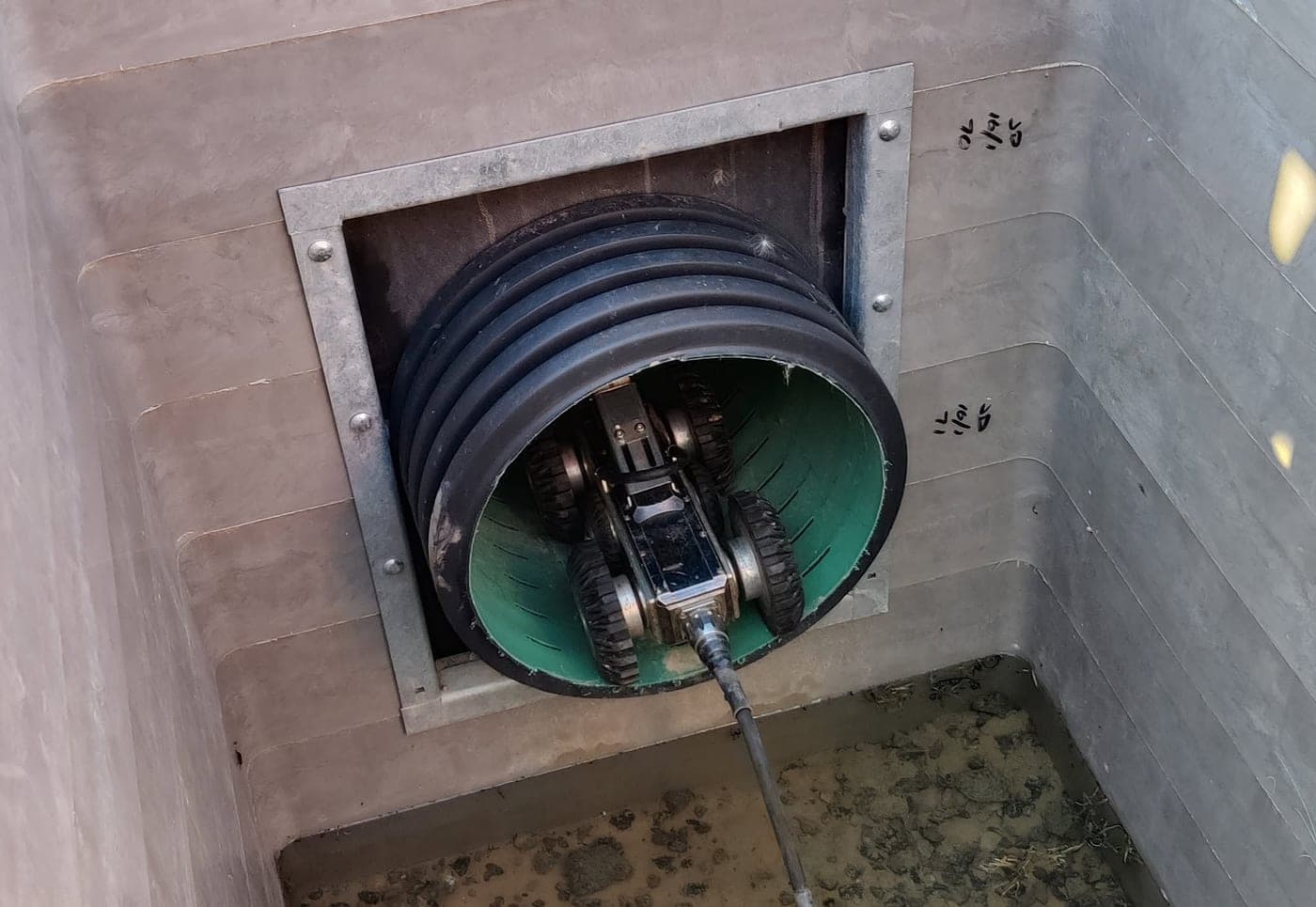
Our state-of-the-art CCTV drain survey equipment provides a crystal-clear view of your pipes, allowing us to accurately map your drainage system and identify any issues. We use advanced crawler cameras and push-rod systems to navigate your pipes. It's like an endoscopy for your home.

Pinpoint Accuracy

Our cameras record in full HD, allowing us to spot hairline cracks, displaced joints, and root ingress with millimeter precision.

Sonar Tracing

We don't just find the problem; we locate exactly where it is above ground using sonar tracing, so if excavation is needed, it's highly targeted and minimally disruptive.

WRC-Approved Reporting

You receive a comprehensive, industry-standard report detailing every defect, its severity, and a fixed-price quote for remedial work. Accepted by all major UK insurers and mortgage lenders.

Glossary of Drainage Terms

Confused by the jargon in your CCTV drainage survey report? Use our comprehensive A-Z guide to understand exactly what your drainage engineer is talking about.

Aco Drain

A popular brand name often used generically to describe channel drainage or trench drains used to manage surface water.

Attenuation Tank

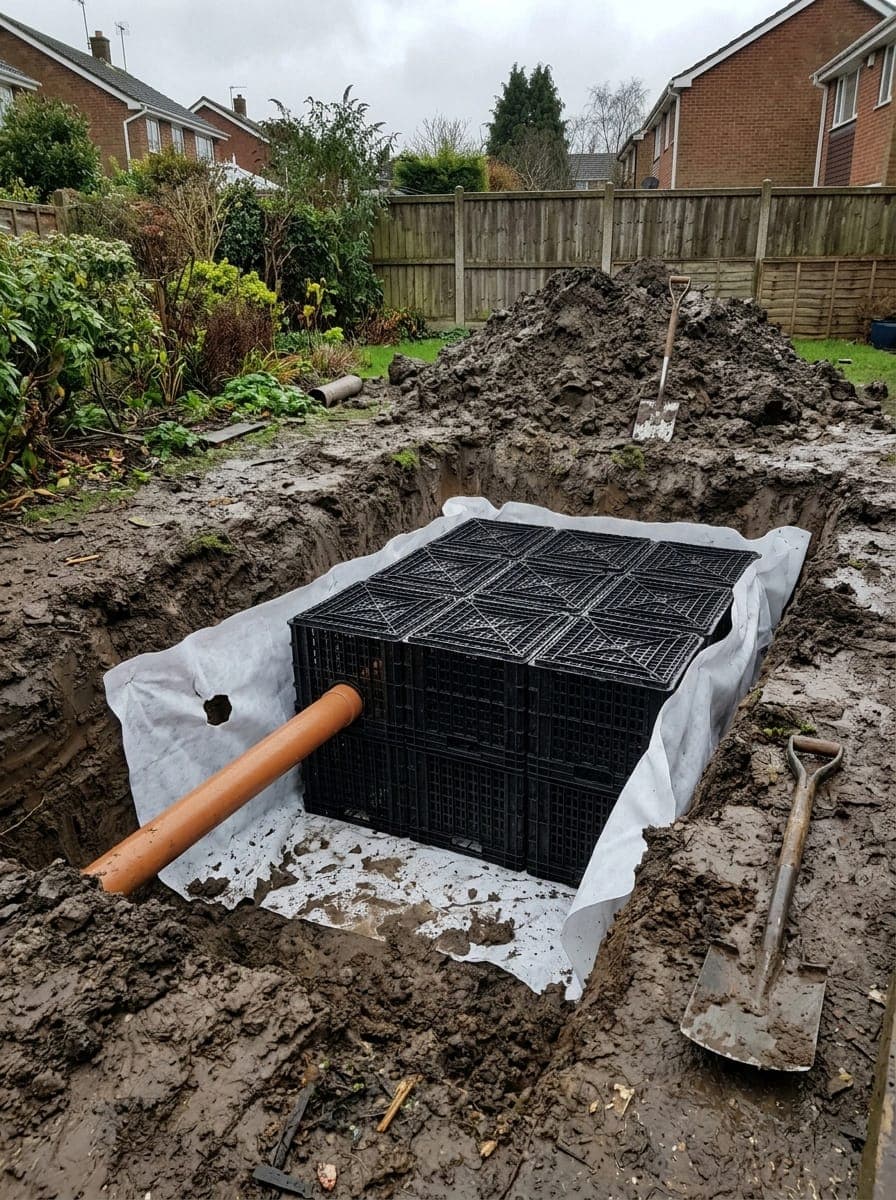
A large underground storage tank designed to hold excess surface water during heavy rainfall, releasing it slowly into the drainage system to prevent flooding.

Backfall

A defect where a pipe slopes in the wrong direction (upwards instead of downwards), causing water and waste to pool rather than flow away.

Benching

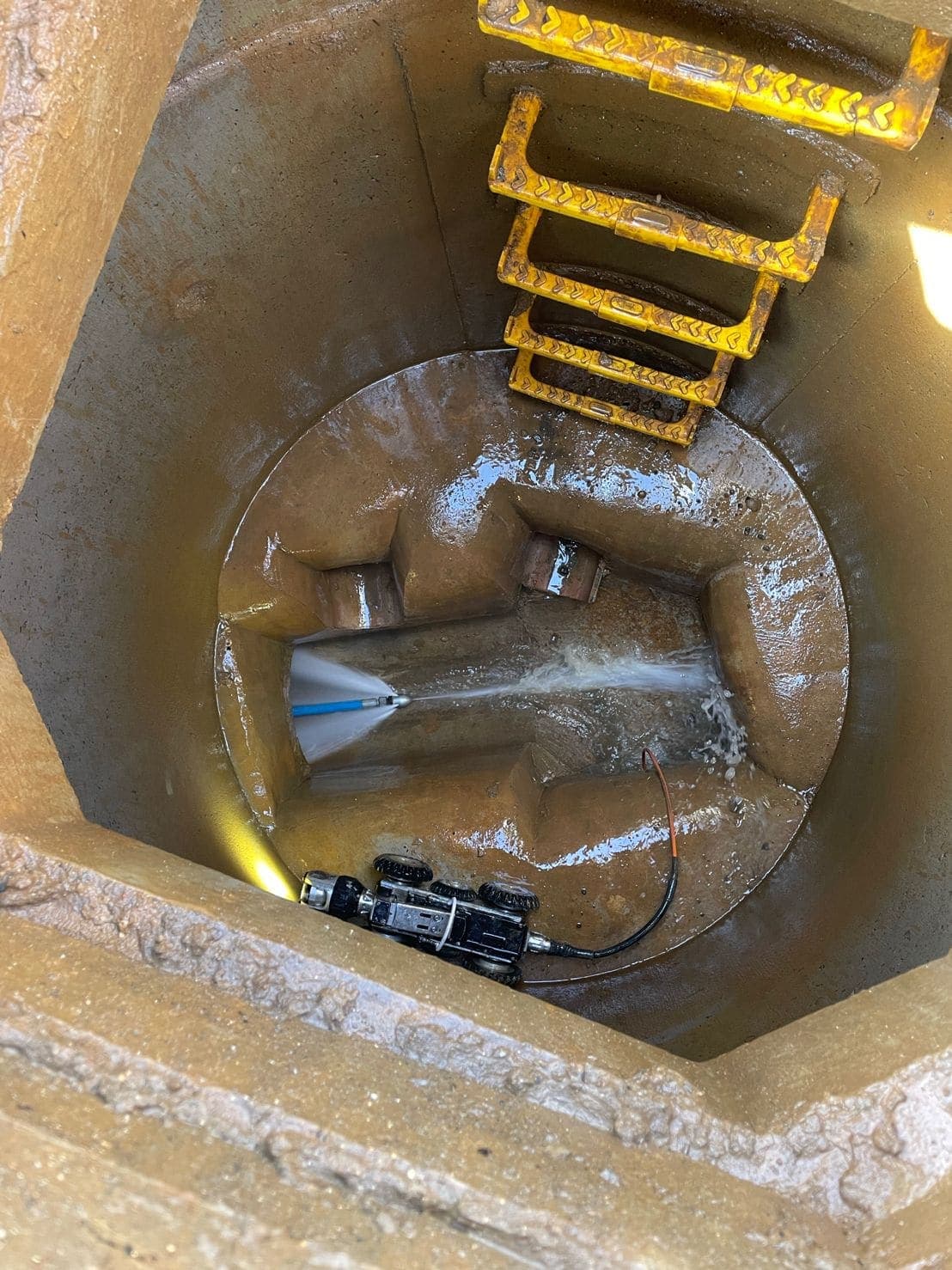
The sloping concrete floor of a manhole or inspection chamber, designed to direct the flow of wastewater into the main channel and prevent solid waste from accumulating.

BOD (Biochemical Oxygen Demand)

A measure of the amount of oxygen required by aerobic microorganisms to decompose organic matter in water. Used to gauge the polluting strength of wastewater.

Build-Over Agreement

A legal agreement required by a water authority if you plan to build over or within 3 meters of a public sewer.

CCTV Drainage Survey

A detailed inspection of an underground drainage system using a specialized, waterproof camera. Used to identify blockages, leaks, structural damage, and root ingress without excavation.

Cesspit

A sealed underground tank that collects sewage and wastewater. Unlike a septic tank, it does not treat the waste or have an outlet, so it must be emptied regularly by a vacuum tanker.

Combined Sewer

A single sewer pipe that is designed to carry both foul water (sewage) and surface water (rainwater) to a treatment plant.

CON29DW

A standard drainage and water enquiry report used during property conveyancing to confirm if a property is connected to public sewers and mains water.

Culvert

A tunnel or structure that allows water to flow under a road, railroad, trail, or similar obstruction.

Descaling

The process of removing scale, rust, concrete, and other hard deposits from the inside of a drainage pipe, typically using specialist mechanical tools or high-pressure water jetting.

Displaced Joint

A structural defect where two sections of pipe have moved out of alignment, creating a step or gap that can snag waste and allow water to leak out or roots to enter.

Dye Testing

A method used to trace the flow of water and confirm connectivity within a drainage network by adding a harmless, brightly colored dye to the water.

Effluent

Liquid waste or sewage discharged into a river, the sea, or a drainage network.

Fatberg

A extremely large mass of solid waste in a sewerage system, consisting primarily of congealed fat, oil, grease (FOG), and non-biodegradable items like wet wipes.

Flail

A specialist attachment used with high-pressure water jetting or mechanical milling machines, featuring spinning chains or blades to cut through tough roots or hard scale.

FOG (Fat, Oil, and Grease)

A major cause of blockages in commercial kitchens and restaurants. FOG solidifies in pipes, leading to fatbergs.

Foul Drainage

The system of pipes that carries wastewater away from toilets, sinks, baths, showers, and household appliances to the sewer or septic tank.

French Drain

A trench filled with gravel or rock containing a perforated pipe that redirects surface water and groundwater away from an area.

Grease Trap / Grease Interceptor

A plumbing device designed to intercept most greases and solids before they enter a wastewater disposal system. Essential for commercial kitchens.

Gully

A drainage fitting designed to collect surface water from outside areas or domestic wastewater from kitchens and bathrooms, incorporating a trap to prevent foul odors from escaping.

High-Pressure Water Jetting

A highly effective method of cleaning drains and sewers using water propelled at high speeds to break down blockages, cut through roots, and flush out debris.

Interceptor

A trap (often a Buchan trap) historically fitted to a drain near the property boundary to prevent foul air and rodents from the main public sewer from entering the private drainage system.

Invert Level

The level of the lowest point of the inside of a pipe or channel. Crucial for calculating the gradient or 'fall' of a drainage system.

Lining / Relining

A no-dig repair method where a resin-impregnated felt tube is inserted into a damaged pipe and cured in place, creating a new, seamless pipe within the old one.

Manhole / Inspection Chamber

An opening with a removable cover that provides access to an underground sewer or drain for inspection, maintenance, and unblocking.

Patch Repair

A localized no-dig repair used to fix a specific, isolated defect (like a single crack or displaced joint) rather than relining the entire pipe length.

Percolation Test

A test to determine the absorption rate of soil for a septic drain field or soakaway. Required for BRE365 compliant soakaway design.

Pitch Fibre

A type of pipe made from wood cellulose impregnated with coal tar, widely used in the UK from the 1950s to the 1970s. Known for blistering, delaminating, and collapsing over time.

PPM (Planned Preventative Maintenance)

A scheduled program of drain cleaning and inspection designed to prevent blockages and emergencies before they occur. Common in commercial settings.

Rodding

A traditional method of clearing blockages by pushing flexible, interlocking rods through the drainage system.

Root Ingress

When tree or plant roots penetrate and grow inside drainage pipes, usually entering through cracked pipes or displaced joints, causing severe blockages and structural damage.

Section 104 Agreement

A legal agreement under the Water Industry Act 1991 for a water authority to adopt a newly constructed private sewer, taking over responsibility for its maintenance.

Section 106 Agreement

A legal agreement granting permission to connect a private drain or sewer to a public sewer network.

Septic Tank

An underground chamber made of concrete, fiberglass, or plastic through which domestic wastewater flows for basic treatment. Solids settle and liquids discharge to a soakaway.

Soakaway

A buried pit, typically filled with rubble or plastic crates, into which surface water is piped so that it can slowly percolate out into the surrounding soil.

Soil Vent Pipe (SVP)

A vertical pipe that carries soil and wastewater from upper floors to the underground drainage system, while also venting sewer gases safely to the atmosphere above the roofline.

Sonde

A small radio transmitter that can be attached to a CCTV camera or drain rod. It emits a signal that is picked up by a receiver above ground, allowing engineers to pinpoint the exact location and depth of a pipe or defect.

Subsidence

The gradual caving in or sinking of an area of land. In the context of drainage, it is often caused by leaking drains washing away the subsoil supporting a building's foundations.

SuDS (Sustainable Drainage Systems)

Water management practices designed to align modern drainage systems with natural water processes, reducing surface water flooding and improving water quality.

Surface Water

Rainwater that runs off roofs, driveways, patios, and other hard surfaces. This should ideally be directed to a soakaway or a dedicated surface water sewer, not a foul sewer.

Trap

A U, S, or J-shaped section of pipe that retains a small amount of water to create a seal, preventing foul sewer gases from entering a building.

Vacuum Tanker

A specialized truck equipped with a large tank and a powerful vacuum system, used for emptying cesspits, septic tanks, grease traps, and flooded areas.

WRC (Water Research Centre)

An independent organization that provides the standard classification and coding system for drain and sewer defects used in professional CCTV drainage survey reports.

Still not sure what something means?

Our expert engineers are always happy to explain your survey report in plain English. Give us a call and we'll walk you through it.

Frequently Asked Questions about CCTV Drainage Surveys

Everything you need to know about CCTV drainage surveys.

What is a CCTV drainage survey?

A CCTV drainage survey involves passing a small, high-definition camera down your drains to inspect their condition. It helps identify blockages, leaks, root ingress, and structural damage without the need for excavation. It's the fastest and most cost-effective way to diagnose underground issues.

Do I need a drain survey when buying a house?

Yes, a homebuyer CCTV drain survey is highly recommended. Standard building surveys rarely cover underground drainage. A drain survey can uncover hidden issues that might be expensive to fix, allowing you to negotiate the property price or request the seller completes repairs before purchase.

How long does a CCTV drain inspection take?

A typical domestic CCTV drain survey takes between 1 to 2 hours, depending on the size of the property, the complexity of the drainage system, and ease of access to the manholes. We aim to cause minimal disruption to your day.

How much does a CCTV drain survey cost?

Costs vary depending on the property size and whether it's a domestic or commercial survey. We offer competitive, fixed-price quotes with no hidden fees. Contact us today for an exact price for your property—we can usually provide a quote over the phone within minutes.