

Soakaway Design & Installation
Soakaways sized from measured BRE365 infiltration rates, designed to SuDS standards and installed by the same team - test to backfill, one contractor.
A soakaway that was guessed rather than designed fails in its first wet winter. The design inputs are not exotic: how fast does your ground actually absorb water, and how much roof and paving drains to it. The first number comes from a measured BRE365 percolation test, the second from your plans - and from those two, the required storage volume is a calculation, not an opinion. We do the test, the design and the installation as one scope, so the thing in the ground matches the numbers on paper.
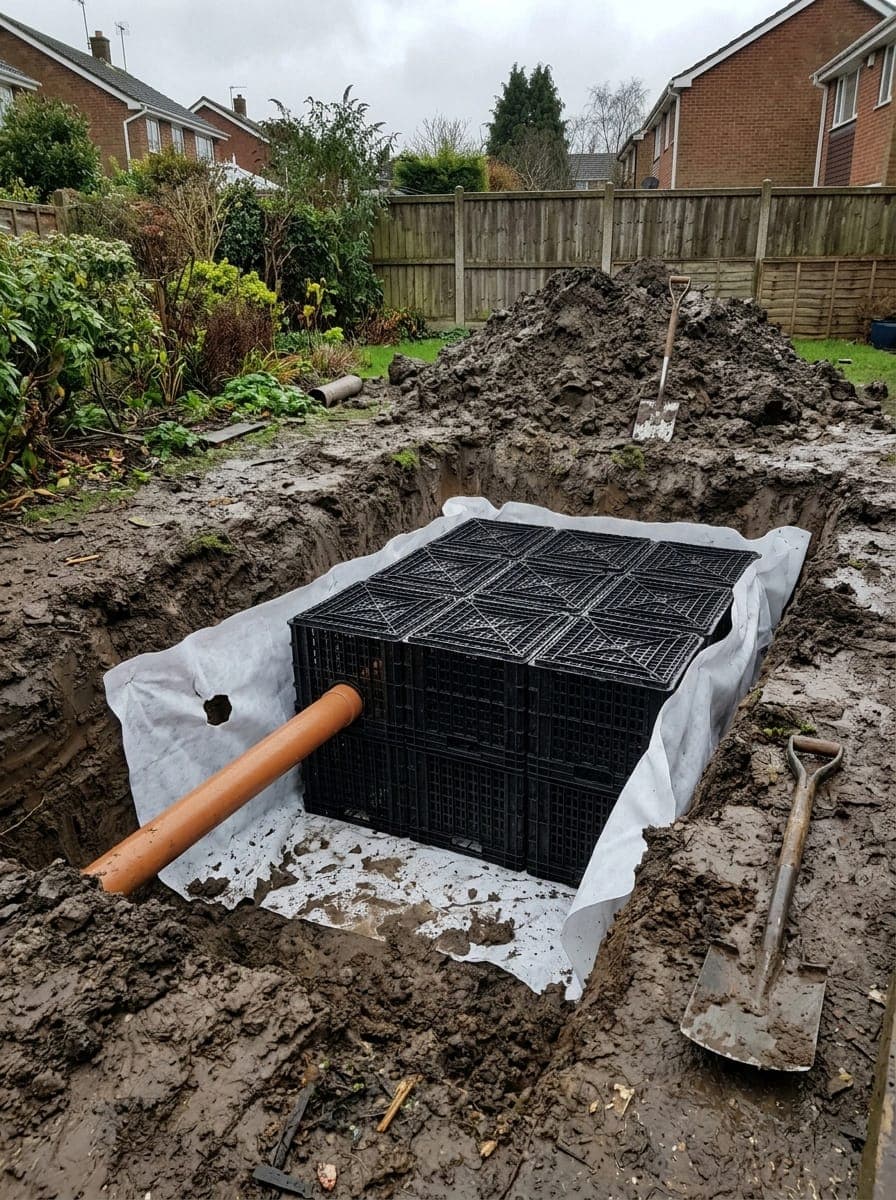
From test to working soakaway
- BRE365 testing: hand-dug pits, timed fills, and a measured infiltration rate reported in the format building control asks for first.
- Design and sizing: storage volume calculated from the measured rate and the drained area, specified as attenuation crates with geotextile separation - SuDS-compliant and sized with headroom, not to the bare minimum.
- Installation: excavation at the regulation distance from buildings, membrane and crates placed, pipework connected, and the excavation backfilled and reinstated.
- Documentation: the test report, design calculation and installation photographs in one pack for building control sign-off.
Local ground, honestly handled
The Surrey-Hampshire border is a lottery of ground conditions - free-draining sand near the heathland, heavy clay in pockets a street away. On clay, a conventional soakaway may simply not work, and the test proves it before you spend on one; the design answer is then larger attenuation, a different discharge point, or a drainage strategy conversation with building control. Finding that out from a £-hundreds test rather than a failed £-thousands install is the entire argument for testing first.
Extension, new driveway, or a soakaway that has failed?
Call Clever Works on 01252 917235 or request a fixed quote - test, design and installation priced together or separately, as your project needs.
Need Expert Assistance?
At Clever Works, we provide comprehensive drainage solutions with transparent pricing and no hidden fees. Get in touch today for a free, no-obligation quote.
Frequently Asked Questions
How do I know if my soakaway has failed?
Water pooling above it in rain, a lawn that stays soggy for days, or gutters backing up are the usual signs. Old rubble-filled soakaways silt up over decades; replacement with properly wrapped crates is the fix.
How far from the house must a soakaway be?
At least 5 metres from any building's foundations, per building regulations. Siting is part of the design and we confirm it against services and boundaries before digging.
Do I need planning permission?
Usually not - soakaways generally fall under permitted development - but building control approval is needed for new builds and extensions, which is exactly what the BRE365 report and design calculation are for.
Can foul water go to a soakaway?
No. Soakaways take rainwater and surface water only. Foul drainage needs a sewer connection, septic tank or treatment plant.